
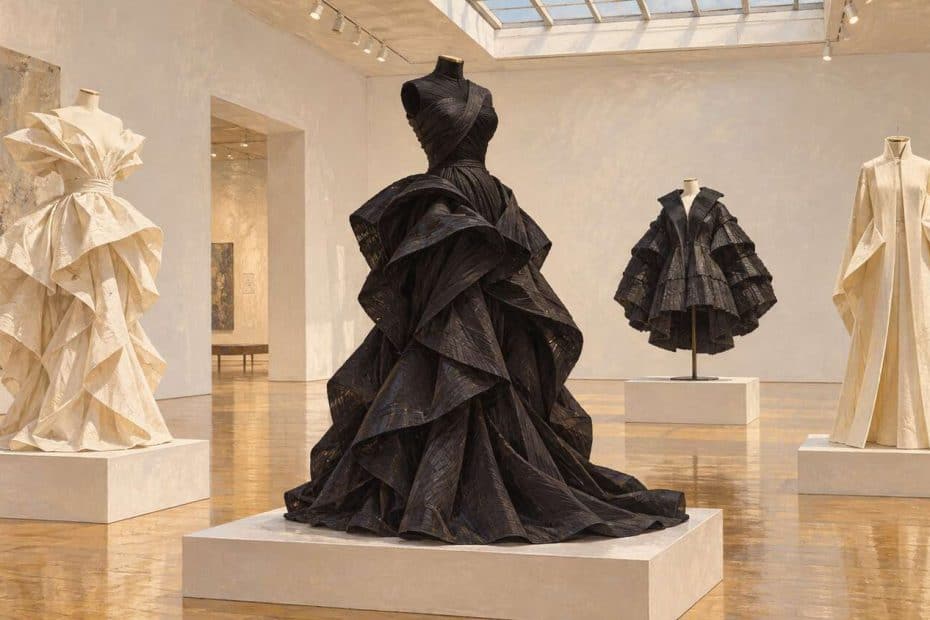
In short: Rei Kawakubo, born in Tokyo in 1942, founded Comme des Garçons in 1969 with no formal fashion training. Her black, holed and asymmetric clothes shocked Paris in 1981, and her 1997 Body Meets Dress collection questioned the shape of the body itself. In 2017 the Met’s Costume Institute gave her a solo exhibition of about 140 pieces, only the second for a living designer after Yves Saint Laurent.
Updated 19 November 2026 by Studio Notes editors
Rei Kawakubo is “one of the most important and influential designers of the past 40 years”, in the words of the Met’s curator Andrew Bolton in the exhibition announcement, yet she never studied fashion. Through her label Comme des Garçons she has questioned what clothes are for, who they flatter and whether they need to follow the body at all. Many avant-garde designers, including the London designers covered on this site, work in the space she opened.
This guide covers her life, her key collections, the business she built and the 2017 exhibition at the Metropolitan Museum of Art. For context, see our profiles of Gareth Pugh and Alexander McQueen.

Who is Rei Kawakubo?
Rei Kawakubo was born in Tokyo on 11 October 1942, according to Wikipedia. She studied the history of aesthetics at Keio University from 1960 to 1964, a course that covered both Eastern and Western art. After graduating she worked in the advertising department of the textile company Asahi Kasei, then became a freelance stylist in 1967.
Two years later, in 1969, she began designing and making her own clothes under the Comme des Garçons label, and incorporated the company in Tokyo in 1973. The name is French for “like the boys”. A men’s line followed in 1978.
Paris 1981 and “Hiroshima chic”
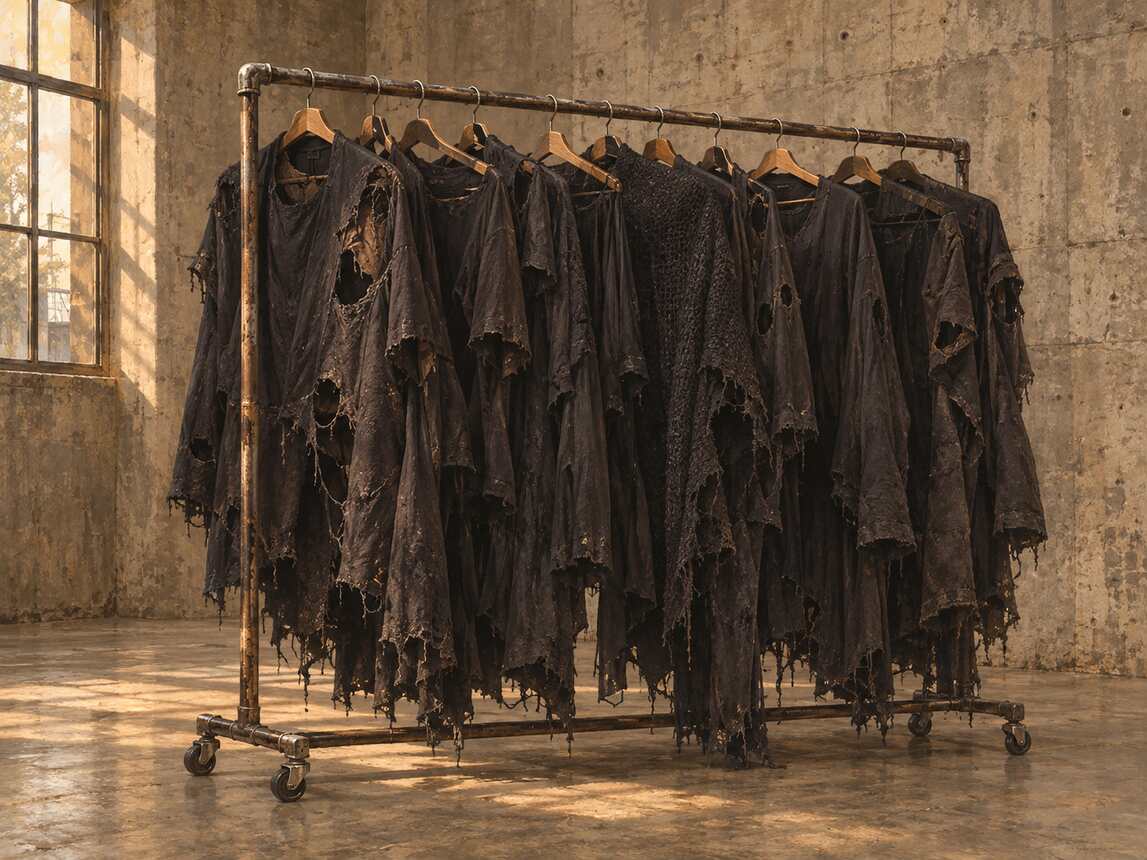
Kawakubo first showed in Paris in 1981. Her clothes were mostly black, loose, asymmetric and sometimes torn or full of holes, as Nippon.com describes. The show caused an uproar, and journalists called the look “Hiroshima chic”, according to Wikipedia.
Others saw a new idea of beauty. Kawakubo’s work refused to decorate the body in the usual way. Instead it treated the garment as an object in its own right, often unfinished, with raw edges and unusual proportions. Many later avant-garde designers have worked in the space this approach opened.

Body Meets Dress, Dress Meets Body
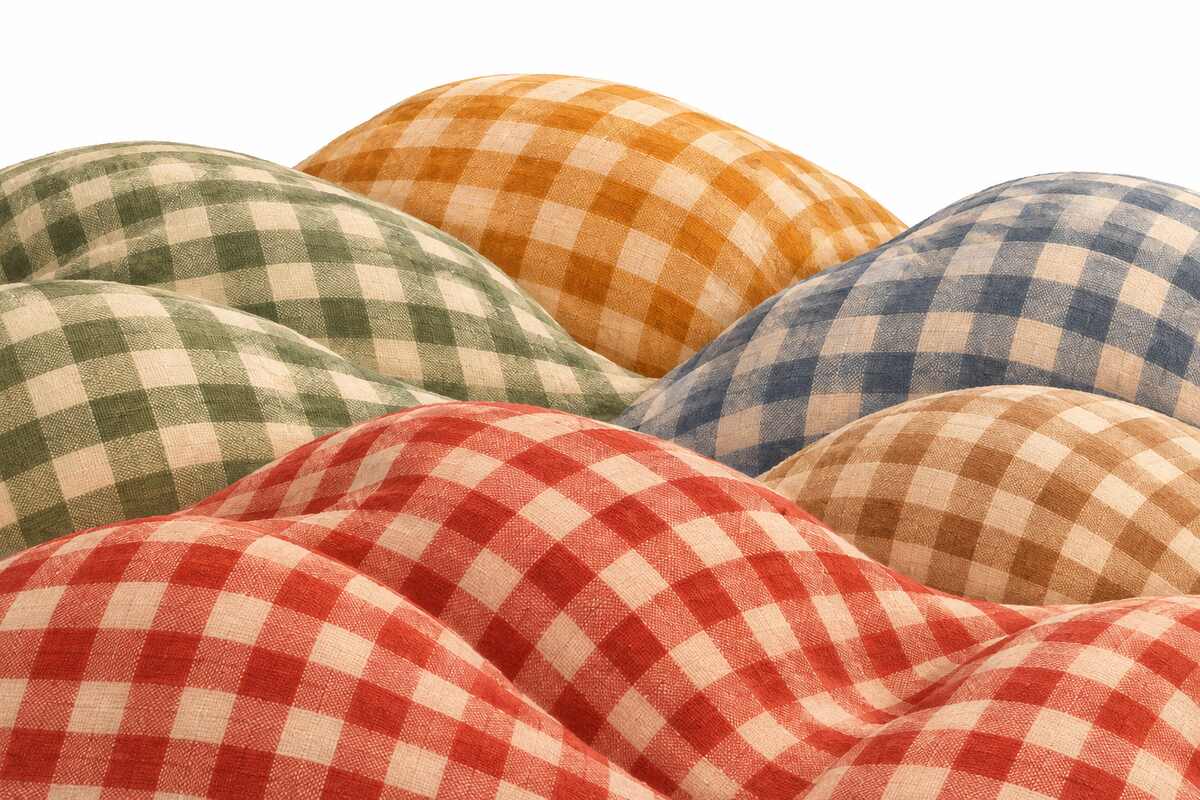
Her spring/summer 1997 collection, Body Meets Dress, Dress Meets Body, is one of the best known in modern fashion. Dresses and skirts of stretch nylon, many in pink or blue gingham, were padded with goose down, mostly arranged asymmetrically, so the body seemed to swell in unexpected places, the Met explains. The collection asked what a “normal” body shape is and why clothes should follow it.
The work also crossed into dance. The choreographer Merce Cunningham built his 40-minute piece Scenario around it, a collaboration with Kawakubo that premiered at the Brooklyn Academy of Music on 14 October 1997. Like Gareth Pugh’s move from catwalk to fashion film, it showed clothes working as performance.
How Comme des Garçons works as a business
Comme des Garçons has grown well beyond a single runway line. Adrian Joffe joined the company in 1987, and he and Kawakubo married in Paris in 1992, according to Wikipedia. Three projects show how the company works:
- Six magazine. In the early 1990s the company published its own visual magazine, Six, mostly photographs and images with very little text.
- Designers she has supported. Junya Watanabe and, later, Tao Kurihara started their own sub-labels under the Comme des Garçons name.
- Dover Street Market. In 2004 the company opened Dover Street Market in London, a multi-storey shop that mixes Comme des Garçons with other labels in spaces designed like art installations. It has since opened in other cities.

| Year | Event |
|---|---|
| 1942 | Born in Tokyo on 11 October |
| 1969 | Starts the Comme des Garçons label |
| 1973 | Incorporates the company in Tokyo |
| 1978 | Launches a men’s line |
| 1981 | First show in Paris |
| 1997 | Body Meets Dress, Dress Meets Body collection |
| 2004 | Opens Dover Street Market in London |
| 2017 | Solo exhibition at the Met’s Costume Institute |
Art of the In-Between at the Met
From 4 May to 4 September 2017 the Metropolitan Museum of Art showed Rei Kawakubo/Comme des Garçons: Art of the In-Between. It featured about 140 examples of her womenswear from the early 1980s onwards, according to the Met. It was the Costume Institute’s first monographic show on a living designer since Yves Saint Laurent in 1983, the Met’s announcement said.
The Met arranged the pieces around pairs of opposites that her work blurs, such as:
- Absence and presence
- Design and not design
- Fashion and anti-fashion
- High and low
- Self and other
- Object and subject
- Clothes and not clothes
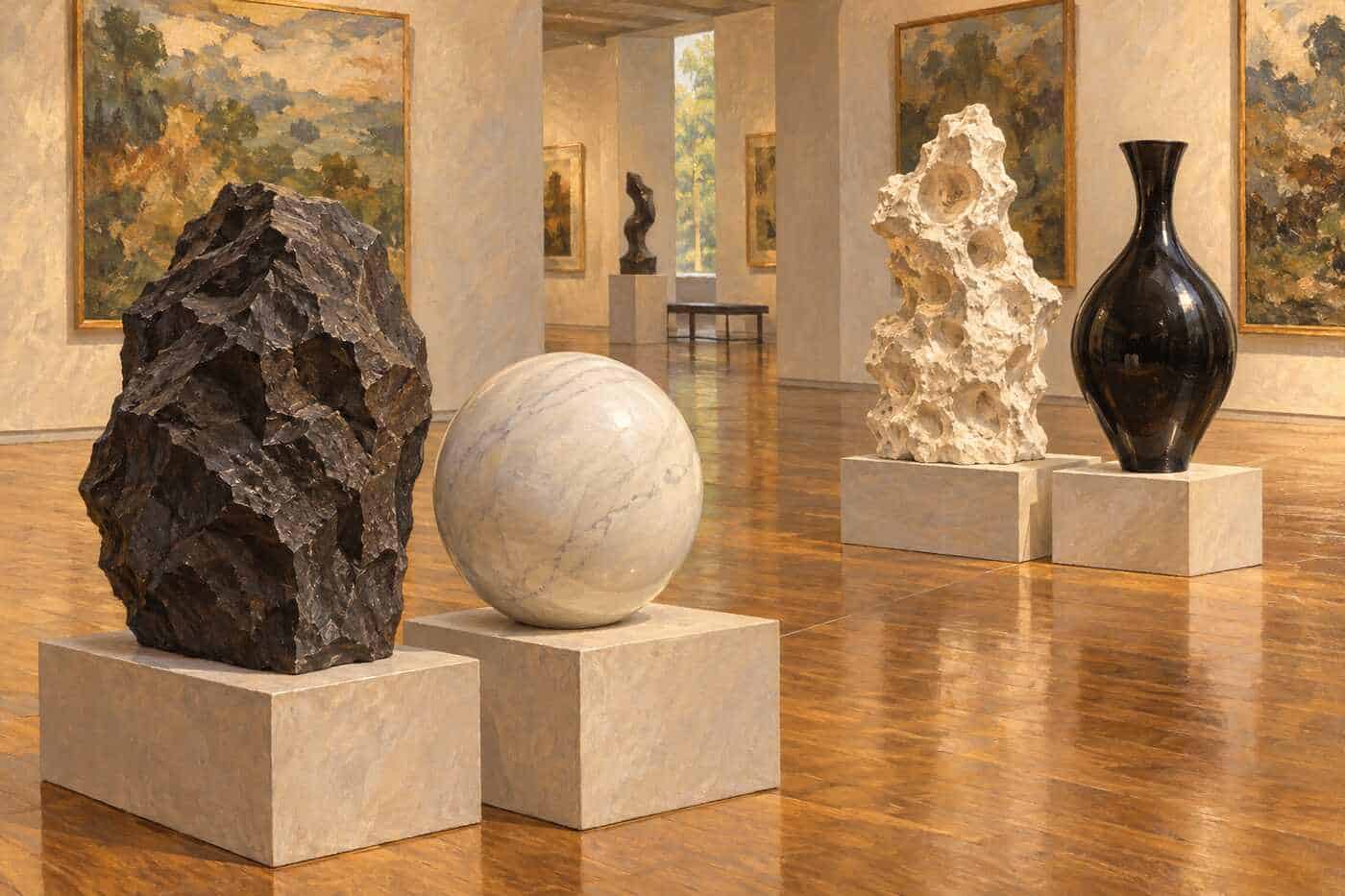
That idea of the “in-between” sums up Kawakubo’s place in fashion: her clothes sit between garment and sculpture, and between design and art. It is the same question we explore in why fashion design is considered a true form of art. For a look at how designers in Asia have built their own fashion scenes, see our guide to Thai fashion designers.
Key takeaways
- Rei Kawakubo was born in Tokyo in 1942 and studied aesthetics, not fashion, at Keio University.
- She started Comme des Garçons in 1969 and first showed in Paris in 1981.
- Her 1997 Body Meets Dress, Dress Meets Body collection used padding to change the body’s outline.
- The company opened Dover Street Market in London in 2004.
- The Met’s 2017 show of about 140 pieces made her the second living designer with a solo Costume Institute exhibition.
Common questions
Who is Rei Kawakubo?
A Japanese designer, born in Tokyo in 1942, who founded Comme des Garçons in 1969 and is known for black, sculptural and unconventional clothes.
What does Comme des Garçons mean?
It is French for “like the boys”.
Did Rei Kawakubo study fashion?
No. She studied the history of aesthetics at Keio University and worked in advertising and as a stylist before making clothes.
What was the Body Meets Dress collection?
Her spring/summer 1997 collection, which padded stretch nylon and gingham garments with goose down to change the shape of the body.
What was the Met’s Rei Kawakubo exhibition?
Rei Kawakubo/Comme des Garçons: Art of the In-Between, shown from 4 May to 4 September 2017 with about 140 examples of her womenswear.
What is Dover Street Market?
A multi-label shop opened by Comme des Garçons in London in 2004, with spaces designed like art installations.
How we put this together: We took the details of Kawakubo’s life and career from Wikipedia and Nippon.com, and the exhibition and collection facts from the Metropolitan Museum of Art. This is an independent guide with no link to Rei Kawakubo, Comme des Garçons, Dover Street Market or the Met.