
What this site is: an independent guide to Gareth Pugh and avant-garde fashion, with every fact linked to its source. It is not affiliated with Gareth Pugh, his label or his studio Hard+Shiny, and it sells nothing. Updated 19 November 2026.
Gareth Pugh is an English fashion designer, born in Sunderland in 1981, known for sculptural black-and-white clothes that change the shape of the body. He studied at Central Saint Martins, showed with Fashion East in London, won the ANDAM prize in 2008 and showed in Paris from that year. Since 2018 he has worked mostly in film, stage and costume through Hard+Shiny, the studio he runs with his husband Carson McColl.
This site collects what is known about his work and the wider world of avant-garde fashion in sourced guides. Each one lists its sources at the end.
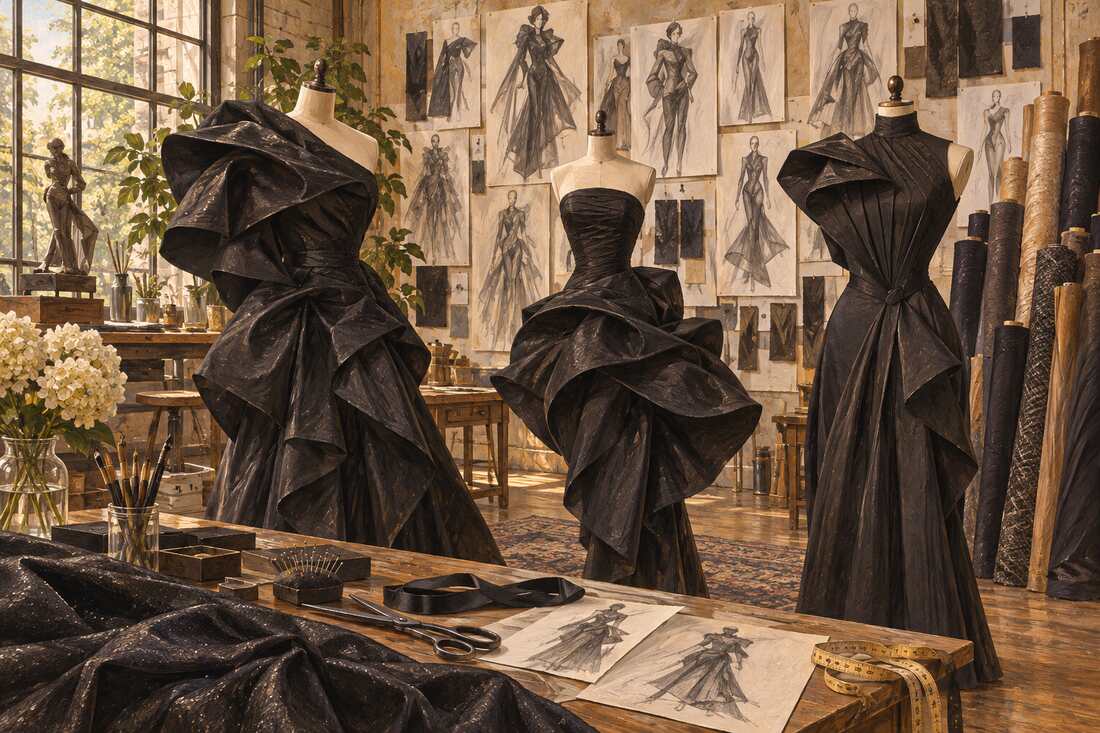
Pugh’s dramatic, stage-like approach has travelled far beyond London and Paris. Bangkok Fashion Week and Thai designers have picked up the same theatrical style. For Thai models, pageants and celebrities, ThaiMag covers who is who.
New on the guide
Alexander McQueen: Savage Beauty and the shows that changed fashion
Savile Row training, Givenchy, the No. 13 and Plato’s Atlantis shows, and the exhibition that drew 661,509 visitors to the Met and 493,043 to the V&A.
Rei Kawakubo and Comme des Garçons
From Tokyo in 1969 to the 1981 Paris debut, Body Meets Dress, Dress Meets Body, Dover Street Market and the Met’s 2017 exhibition.
Thai fashion designers and the labels to know
Greyhound, Sretsis, Asava and Princess Sirivannavari, the size of Thailand’s fashion economy, and where to see and buy Thai design in Bangkok.

The designer
- Gareth Pugh: the designer, his career and stage costumes: from youth theatre in Sunderland and Central Saint Martins to the ANDAM prize, Paris shows, ballet and opera costumes and Hard+Shiny.
- Fashion film: how SHOWstudio and designers changed shows: Nick Knight’s SHOWstudio, the 2009 live stream of McQueen’s Plato’s Atlantis, and Pugh’s films with Ruth Hogben.
Fashion, art and technology
- Why fashion design is considered a true form of art: how museums collect and show fashion, designers who work like sculptors, and the arguments on both sides.
- How computer-aided design changed fashion design: from Gerber’s 1969 cutter and Lectra’s first software to 3D sampling.
Designers and fashion around the world
- Alexander McQueen and Savage Beauty: his life, key shows and the record-breaking exhibition.
- Rei Kawakubo and Comme des Garçons: the designer who questioned the shape of clothes.
- Thai fashion designers: Bangkok’s leading labels and its fashion week.
Fashion careers and industry
- Fashion design business skills: what success takes: design, pattern cutting, CAD and business skills, with pay and job figures.
- The importance of fashion design in our lives: identity, the size of the UK fashion economy and fashion’s environmental footprint.
Avant-garde fashion in brief
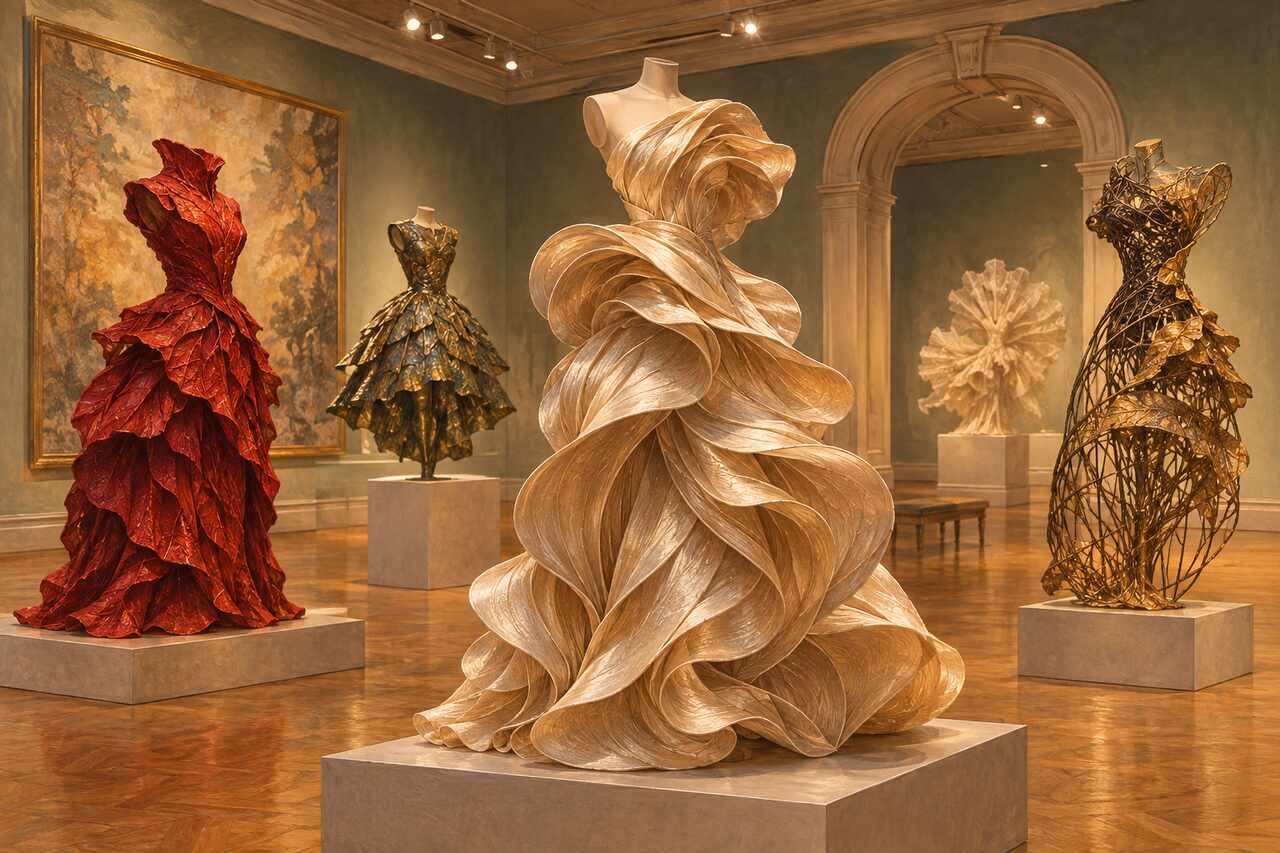
Avant-garde fashion is design that puts ideas before ease of wear. Its designers treat the body as a frame for shapes, materials and performance, and their shows are often closer to theatre than to a sales event. London has been a centre for it for decades, helped by schools such as Central Saint Martins and support schemes such as the British Fashion Council’s NEWGEN, set up in 1993, and Fashion East, founded in 2000.
Club culture has always fed this kind of fashion: Pugh himself came to notice through a London club night. For nights out in Thailand’s capital, ThailandWiki’s guide to Bangkok nightclubs covers the city’s clubs.
Much of this work now reaches people through film and images rather than live shows. SHOWstudio, launched by Nick Knight in November 2000, made the case for seeing fashion in motion, and Pugh was one of the first designers to replace a Paris catwalk with a film, in 2009.
The industry behind it is large. The British Fashion Council says UK fashion directly added £28.9 billion to the economy in 2021. It also has a heavy footprint, which is why design choices about materials and lifespan matter.
Frequently asked questions
Is this the official Gareth Pugh website?
No. This is an independent guide to Gareth Pugh and avant-garde fashion. It is not affiliated with Gareth Pugh, his label or his studio Hard+Shiny, and it sells nothing.
Who is Gareth Pugh?
An English fashion designer, born in Sunderland in 1981, known for sculptural black-and-white clothes. He won the ANDAM prize in 2008 and now works mostly in film, stage and costume. Our profile covers his career.
What is avant-garde fashion?
Design that puts ideas before ease of wear, treating the body as a frame for shapes, materials and performance. Designers such as Alexander McQueen and Rei Kawakubo are leading examples.
Why do museums show fashion?
Because many designers work like artists, and the public comes to see it. The Met’s 2011 McQueen show drew 661,509 visitors. See our essay on fashion as a true form of art.
Does Thailand have its own fashion designers?
Yes. Labels such as Greyhound, Sretsis and Asava are well known, and Bangkok International Fashion Week runs each year. Our guide to Thai fashion designers has the details.
Where does this guide get its facts?
From museums, official statistics, magazines and other published sources. Every guide lists its sources at the end so readers can check them.

Why this site exists
An earlier website on this address published articles about fashion design, and many pages across the web still link to it. That site is no longer online. We rebuilt the subject as a set of checked, sourced guides, so readers following those links find useful information. Read more about this guide, including how we use AI tools and illustrations, or use the contact page to report an error.