
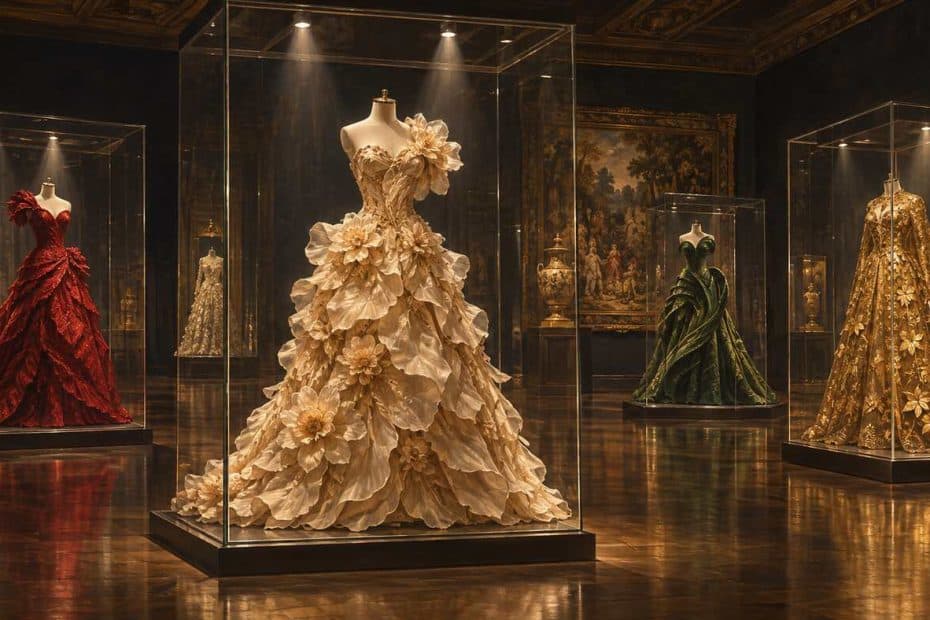
In short: Alexander McQueen (1969 to 2010) trained as a tailor on Savile Row, graduated from Central Saint Martins in 1992 and ran Givenchy from 1996 to 2001 while building his own label. His shows, from Highland Rape (1995) to No. 13 (1999) and Plato’s Atlantis (2009), treated fashion as theatre. Savage Beauty drew 661,509 visitors to the Met in 2011 and 493,043 to the V&A in 2015, a record for the London museum.
Updated 19 November 2026 by Studio Notes editors
Few designers have shown as clearly as Alexander McQueen that a fashion show can be a work of art. His collections drew on history, nature and violence, and his shows used rain, fire, robots and holograms. He trained as a tailor, so the clothes were cut with great skill even when the ideas were extreme.
This guide covers McQueen’s training, his most important shows and the exhibition, Savage Beauty, that broke records in New York and London. Gareth Pugh, the subject of our designer profile, came out of the same London scene a decade later. For the way McQueen used film and the internet, see our guide to fashion film.
Who was Alexander McQueen?
Lee Alexander McQueen was born in Lewisham, London, on 17 March 1969, according to Wikipedia. After a tailoring course at Newham College he served a two-year apprenticeship in coat-making with the Savile Row tailors Anderson & Sheppard. That training in cutting and construction stayed at the heart of his work.
In October 1990 he began the 18-month master’s course in fashion design at Central Saint Martins. He showed his graduation collection, Jack the Ripper Stalks His Victims, at London Fashion Week in March 1992. The magazine editor Isabella Blow bought the whole collection and became one of his most important supporters.
The shows that made his name
McQueen’s shows were designed to shock and to tell stories. Three stand out:
- Highland Rape (autumn/winter 1995). A collection about the Highland Clearances of the eighteenth and nineteenth centuries,, with tartan drawn from his Scottish ancestry.
- No. 13 (spring/summer 1999). Shown in a London warehouse on 27 September 1998. In the finale, two robot arms from a car factory spray-painted the model Shalom Harlow’s white dress yellow and black.
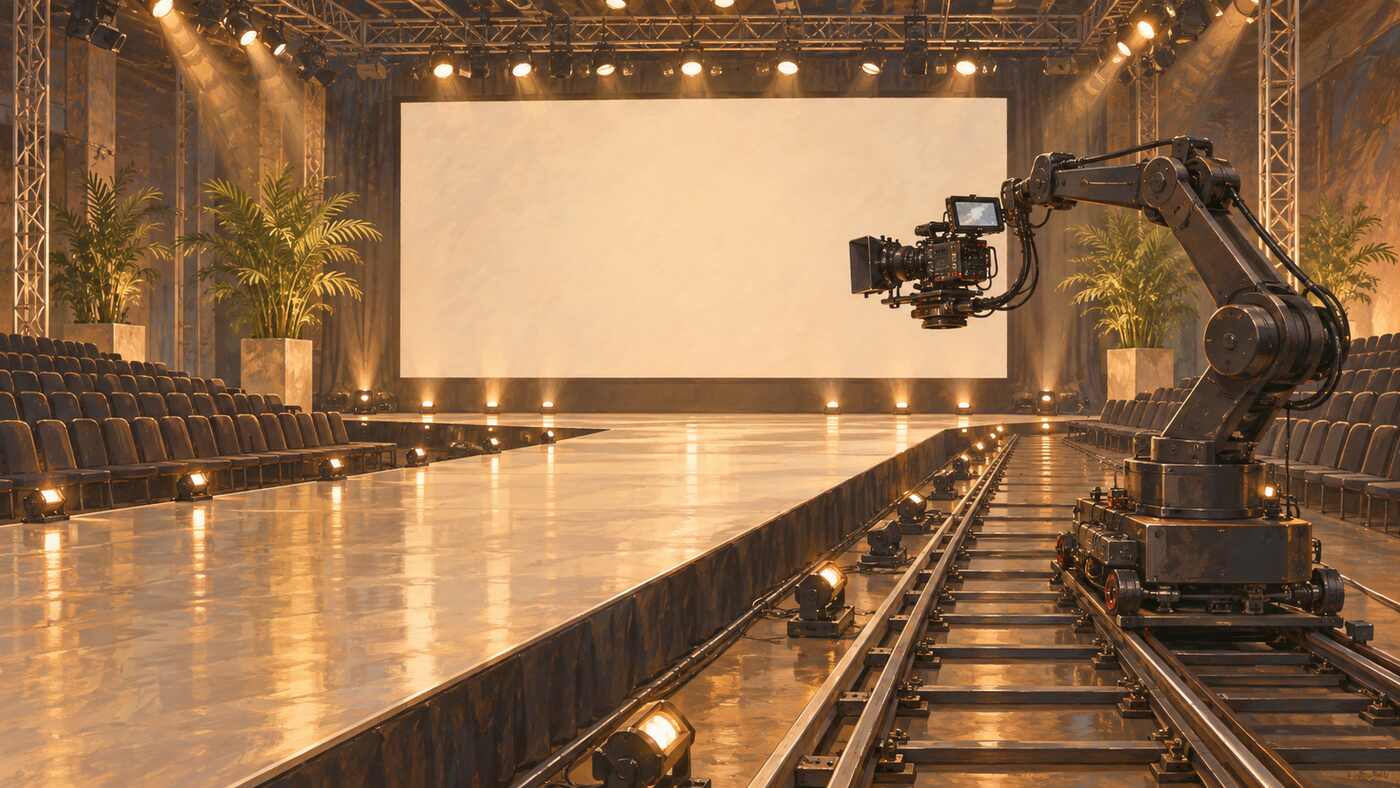
- Plato’s Atlantis (spring/summer 2010). Shown in Paris on 6 October 2009. Two robotic cameras ran on tracks along the stage and the show was streamed live online, one of the first major shows to be broadcast this way.
These details come from Wikipedia’s account of his career. Our page on fashion film explains how SHOWstudio streamed Plato’s Atlantis.
Givenchy and his own label
In 1996 McQueen was appointed head designer of Givenchy in Paris, succeeding John Galliano. He worked there until March 2001, when his contract ended. At the same time he kept showing his own label in London and later in Paris. He was named British Designer of the Year four times between 1996 and 2003.
In 2000 the Gucci Group bought 51 per cent of his company, with McQueen staying as creative director. This gave the label the money to open shops and grow while he kept control of design.
| Year | Event |
|---|---|
| 1969 | Born in Lewisham, London, on 17 March |
| 1992 | Central Saint Martins graduation show; Isabella Blow buys it |
| 1995 | Highland Rape, autumn/winter collection |
| 1996 | Head designer at Givenchy; first British Designer of the Year award |
| 1998 | No. 13 show with the spray-painting robots |
| 2000 | Gucci Group buys 51 per cent of his company |
| 2009 | Plato’s Atlantis, streamed live from Paris |
| 2010 | Dies on 11 February, aged 40 |
| 2011 and 2015 | Savage Beauty at the Met and the V&A |

How did McQueen change fashion?
McQueen’s influence can be seen in three areas. First, he made the runway show a piece of theatre, with sets, stories and effects that people still discuss decades later. Second, he joined Savile Row tailoring skill with radical shapes, so even his most extreme clothes were precisely cut. Third, he embraced technology, from robots on the runway to live streaming, long before most houses did.
McQueen died on 11 February 2010, aged 40. In May 2010 his long-time assistant Sarah Burton was named creative director of the label, and she showed her first womenswear collection in Paris that September.
Savage Beauty: the record-breaking exhibition
A year after his death, the Metropolitan Museum of Art in New York opened Alexander McQueen: Savage Beauty. It ran from 4 May to 7 August 2011 and drew 661,509 visitors, making it the eighth most visited exhibition in the Met’s history and the most visited Costume Institute show up to then, according to the Met’s press release. It showed some 100 ensembles and 70 accessories, the Met said in a later report.
The exhibition came to the Victoria and Albert Museum in London from 14 March to 2 August 2015. It drew 493,043 visitors, the V&A’s highest attendance for any charging exhibition, according to the V&A. The museum opened through the night for the final two weekends to meet demand, The Independent reported, and visitors came from 87 countries, FashionNetwork reported.

| Venue | Dates | Visitors |
|---|---|---|
| Metropolitan Museum of Art, New York | 4 May to 7 August 2011 | 661,509 |
| Victoria and Albert Museum, London | 14 March to 2 August 2015 | 493,043 |
Savage Beauty helped prove that fashion belongs in art museums, a case we explore in why fashion design is considered a true form of art. It also showed how a designer trained in the most traditional craft could produce some of the most radical work of his time.
For a very different approach to avant-garde design, see our guide to Rei Kawakubo and Comme des Garçons, the second living designer, after Yves Saint Laurent, to be given a solo Costume Institute show, and our introduction to Thai fashion designers.
Key takeaways
- Alexander McQueen was born in London on 17 March 1969 and died on 11 February 2010.
- He trained as a coat-maker with Anderson & Sheppard on Savile Row before Central Saint Martins.
- He was head designer at Givenchy from 1996 to 2001 while running his own label.
- His No. 13 and Plato’s Atlantis shows used robots and live streaming.
- Savage Beauty drew 661,509 visitors at the Met in 2011 and 493,043 at the V&A in 2015.
Common questions
Who was Alexander McQueen?
A British fashion designer (1969 to 2010) who trained on Savile Row, studied at Central Saint Martins, led Givenchy from 1996 to 2001 and ran his own label, known for theatrical shows.
What was Savage Beauty?
A retrospective of McQueen’s work, first shown at the Met in New York in 2011 and then at the V&A in London in 2015. Both runs set attendance records.
How many people saw Savage Beauty?
661,509 at the Met in 2011 and 493,043 at the V&A in 2015.
What happened at McQueen’s No. 13 show?
In the finale, two robot arms from a car factory spray-painted the model Shalom Harlow’s white dress yellow and black.
Who bought McQueen’s graduation collection?
The magazine editor Isabella Blow bought the whole collection after his 1992 Central Saint Martins show.
Who took over the McQueen label after his death?
His long-time assistant Sarah Burton, named creative director in May 2010.
How we put this together: We took the dates and details of McQueen’s life and shows from Wikipedia, and the exhibition figures from the Metropolitan Museum of Art’s press releases and the Victoria and Albert Museum. This is an independent guide with no link to the Alexander McQueen brand, Kering or either museum.