
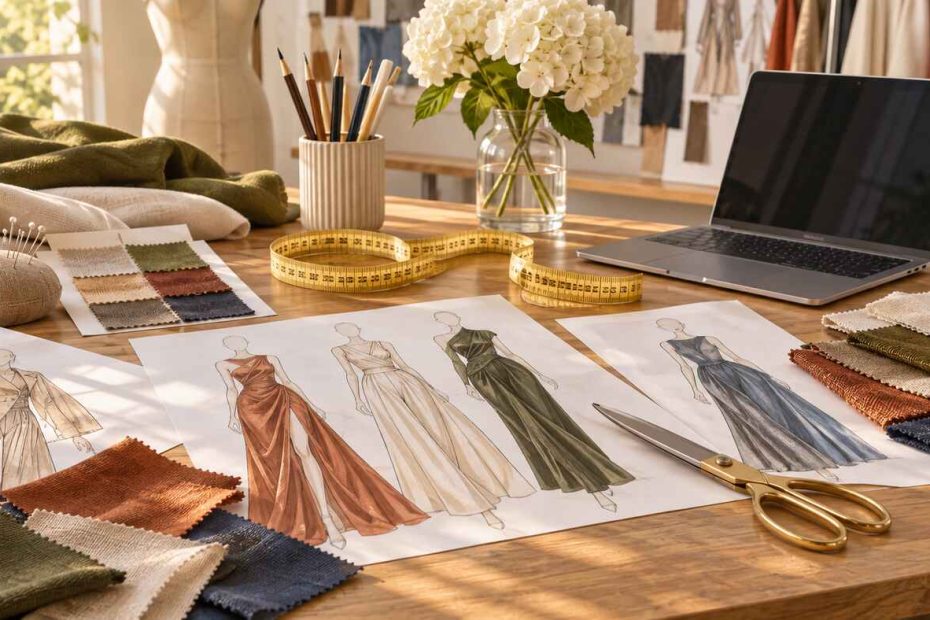
In short: A fashion design business needs more than creative talent. It needs design and drawing skills, pattern cutting and garment construction, computer-aided design, and enough business sense to cost, price and sell a collection. The market is small and competitive: the US Bureau of Labor Statistics counts about 32,700 fashion designer jobs, a median pay of $80,960 and no expected growth from 2025 to 2035.
This guide sets out the skills people need to start and run a fashion design business, and what the job market really looks like. It is an independent explainer based on official job data and published accounts of support schemes. It does not offer courses or services. For background on how designers have used fashion as an art form, see our guide to fashion as art.
Some terms. A toile is a test garment made in cheap fabric to check fit. A line sheet is a document showing a collection’s styles and wholesale prices for buyers. Wholesale means selling to shops, while direct-to-consumer means selling to customers yourself.
What skills does a fashion designer need?
The US Bureau of Labor Statistics lists the important qualities for fashion designers as artistic ability, communication skills, computer skills, creativity, decision-making skills and detail orientation. In practice, that breaks down into four groups: design skills, technical skills, business skills and people skills. A designer working inside a large company may only need the first two. Someone starting a label needs all four.
The BLS says fashion designers typically need a bachelor’s degree in a field such as fashion design or fashion merchandising, and that employers look for a portfolio showing creativity and technical skill. Many designers also gain experience as assistants or interns before working on their own.
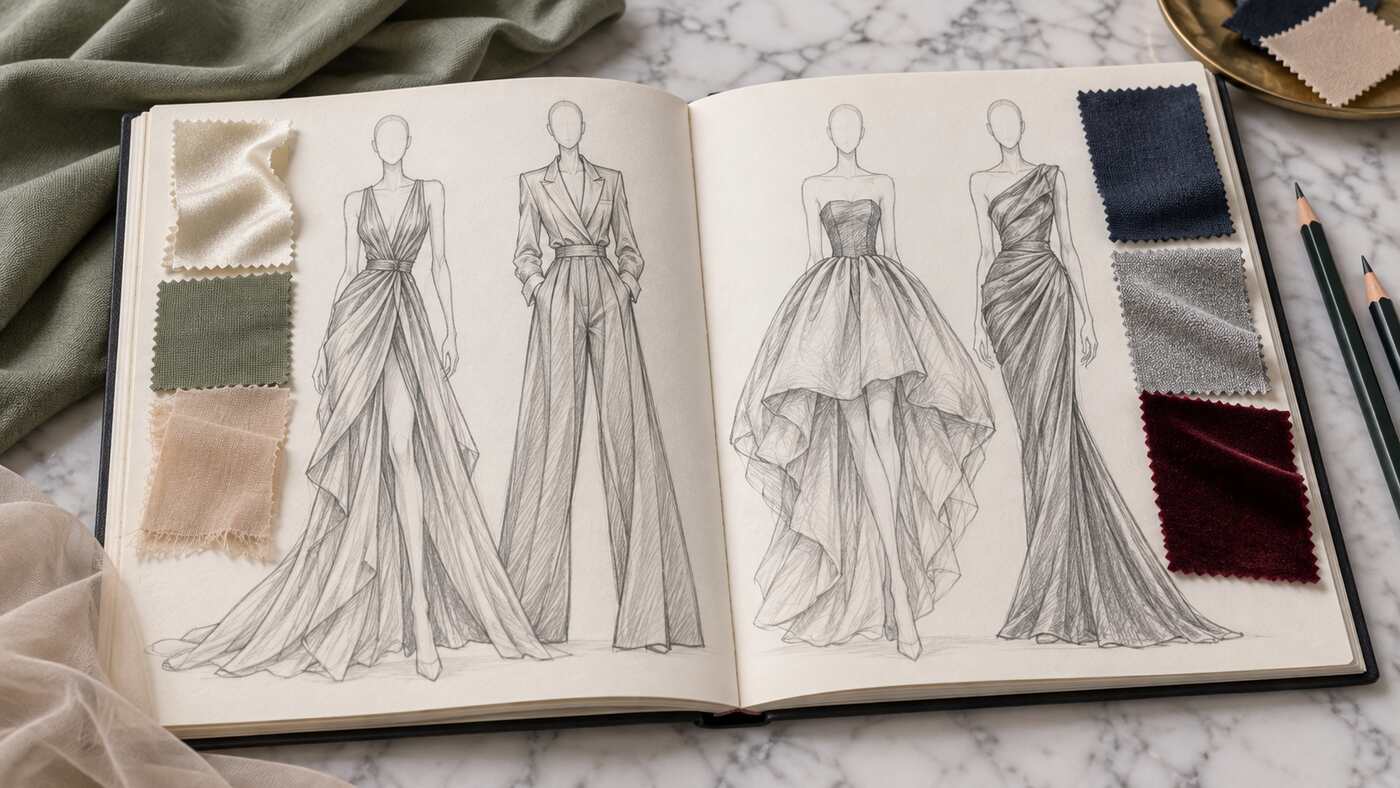
The table summarises the four skill groups a fashion design business needs.
| Skill group | What it covers | Who needs it most |
|---|---|---|
| Design skills | Research, drawing, building a coherent collection | Every designer |
| Technical skills | Pattern cutting, draping, sewing, fabrics, CAD | Designers and product developers |
| Business skills | Costing, pricing, cash flow, production, selling | Anyone running a label |
| People skills | Hiring, managing, working with factories, press and buyers | Founders and senior designers |
Design and drawing
Design skill is the ability to develop an idea into a coherent collection. That includes research, choosing a theme, drawing, and editing ideas down to a set of pieces that work together. Drawing does not need to be fine art, but it must communicate shape, proportion and detail clearly to a pattern cutter or factory.
A strong point of view matters. Designers who stand out, such as Gareth Pugh with his sculptural black-and-white looks, are recognisable from a single garment. Our profile of Gareth Pugh shows how a clear idea carried his label from student work to Paris. Most labels are far less extreme, but buyers and press still look for a consistent identity.
Pattern cutting, construction and CAD
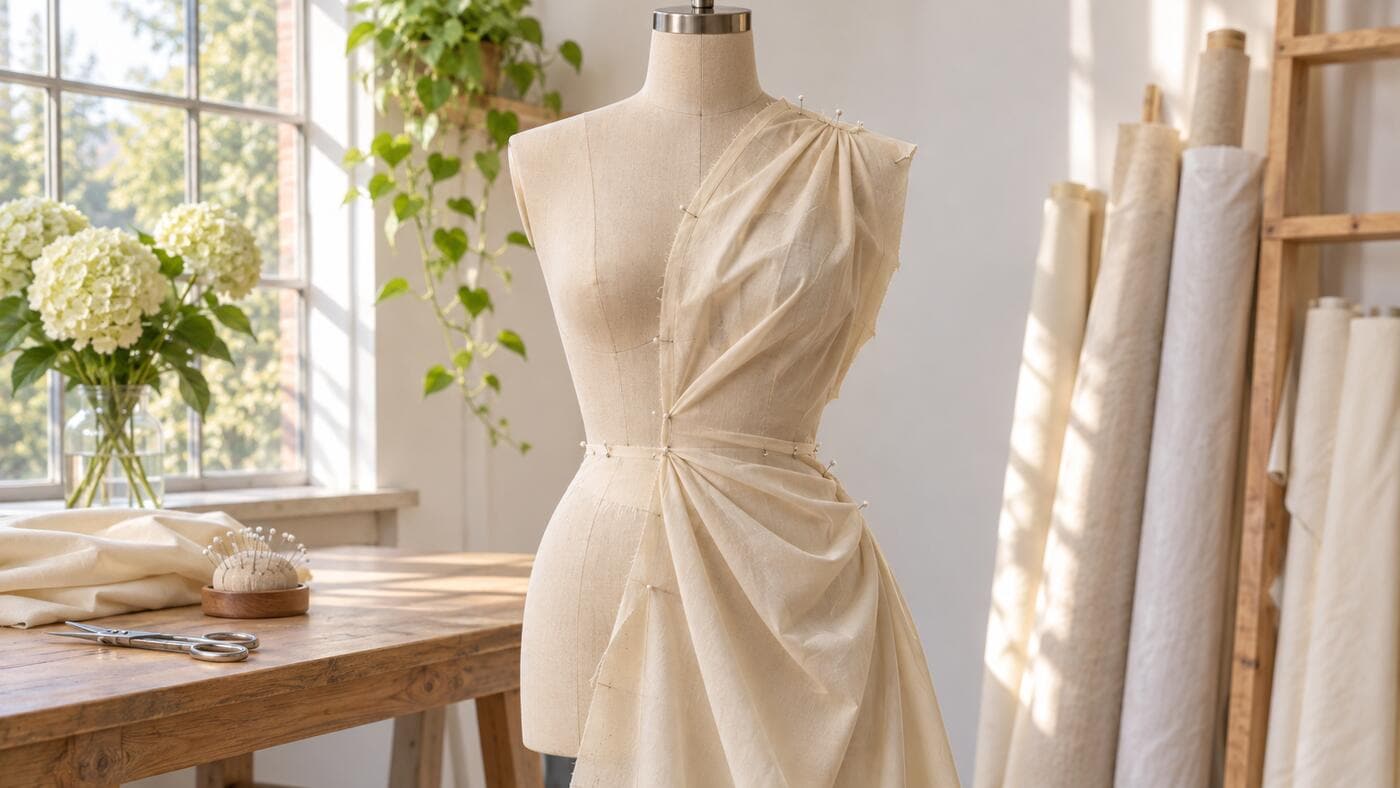
Technical skill turns a drawing into a garment that fits, moves and can be made again. That means pattern cutting, draping on a dress form, sewing, knowing how fabrics behave, and understanding how a factory works. Designers who cannot cut patterns themselves must be able to brief and check the work of people who can.
Computer skills are now part of this. The BLS notes that designers use computer-aided design programs, and many employers expect knowledge of pattern or 3D software. Our guide to computer-aided fashion design explains how these tools developed and what they change.
What business skills does a fashion label need?
Most new labels fail on business, not design. The core business skills are costing each garment, setting wholesale and retail prices, managing cash flow, and planning production so that orders can be delivered on time. A designer also needs to understand minimum order quantities, lead times and the cost of samples.
Selling is the other half. That can mean showing to buyers at a trade fair or showroom, building a direct-to-consumer website, or both. It means writing line sheets, negotiating terms and handling returns. It also means protecting the brand: registering trade marks early and reading contracts carefully before signing investment or licensing deals.
Communication skills, which the BLS lists, run through all of this. Designers must work with pattern cutters, factories, stylists, photographers, buyers and press, often across languages and time zones.

People skills and building a team
Few labels are run by one person for long. As a business grows, the designer has to hire and manage people: pattern cutters, sample machinists, production managers, sales agents and press officers. Knowing what each role does, and what good work looks like, matters more than doing every job personally.
Designers also depend on networks. Stylists, photographers, models, casting directors and editors all shape how a collection is seen. Many new designers build these relationships at college, while assisting other designers, or through support schemes that bring them into contact with press and buyers. Being reliable, delivering on time and treating collaborators well is part of the craft.

The job market and support for new designers
The numbers call for realism. According to the BLS, there were about 32,700 fashion designer jobs in the United States in 2025, with a median annual wage of $80,960 in May 2025. Employment is projected to show little or no change from 2025 to 2035, with about 2,500 openings a year, mostly to replace people who leave the job. The BLS employment matrix shows about 36 per cent of fashion designers were self-employed.
Support schemes help new labels in some countries. In London, the British Fashion Council’s NEWGEN scheme was established in 1993 to support emerging designers. Fashion East, a non-profit founded in 2000 by Lulu Kennedy with the Truman Brewery, says it has supported more than 140 designers, and Vogue has reported that it gives each designer a bursary of £4,000 to make their collection. These schemes offer show space, mentoring and press attention, but they are highly competitive.
For the wider economic picture, our guide to the importance of fashion design covers the size of the UK fashion industry.
Glossary of fashion business terms
- Lead time: the time between placing a production order and receiving the finished goods.
- Minimum order quantity: the smallest number of units a factory or mill will make or sell.
- Sample machinist: the person who sews the first versions of a design.
- Wholesale price: the price a shop pays the label, usually well below the retail price.
- Stockist: a shop that buys and sells a label’s clothes.
Key takeaways
- A fashion design business needs design, technical, business and people skills.
- Most US fashion designers hold a bachelor’s degree and a strong portfolio.
- CAD and 3D software are now expected in many design jobs.
- The BLS projects little or no growth in US fashion designer jobs from 2025 to 2035.
- Schemes such as NEWGEN and Fashion East support emerging designers in London.
Common questions
How much do fashion designers earn?
In the United States the median annual wage was $80,960 in May 2025, according to the BLS. Pay varies widely by employer, place and experience, and income from a new label is often far lower at first.
Do you need a degree to become a fashion designer?
The BLS says most fashion designers have a bachelor’s degree, but employers also look closely at portfolios and experience. Some designers start through apprenticeships or assistant roles.
How do you start a fashion design business?
Most founders start small: a tight first collection, careful costing, a few stockists or a direct online shop, and a plan for cash flow. Support schemes, competitions and showrooms can help with visibility.
What is the hardest part of running a fashion label?
Founders often name cash flow and production. Labels pay for fabric and making long before they are paid by shops or customers, so a successful season can still strain the business.
How we put this together: pay, job and education figures come from the US Bureau of Labor Statistics Occupational Outlook Handbook and its employment projections matrix. Details of NEWGEN and Fashion East come from the British Fashion Council, Fashion East and Vogue. Business-skill advice is general and not tailored to any one business.